A PRODUCER’S REFLECTION: ANKHADADA
People can only meet you as deeply as they've met themselves, and it's safe to say I am an independent writer and producer, carrying nothing into theatre but my experiences, hopes, dreams, competence, and passion.
As I write this, at least parts of it, I am on the SGR, on my way back from Mombasa. I had wondered how best to begin telling the story of one of the most illuminating weeks of my life but as it turns out creative work has no schedule so to speak. "It is my duty to care" are words that were said to me six NBO MTI x Sanara workshops ago, at a time when I didn't yet realise what those words would come to mean in the theatre space. This week, during the Mombasa workshop, my understanding flowered. Everything is indeed theatre. Literally, everything.

Image by Tafari
We started the week off with the usual registration, and I must say, as an alumna of the first cohort, the growth was palpable. Registration was digital and faster than I anticipated, since I'd volunteered to help at the tagging desk. One of my fondest memories from the scriptwriting workshop was how intentional the crew was. "Good morning" and "how are you" were given freely. I carried this with me to Mombasa and watched it in full effect. It gave me the warmest feeling to realise that a gesture I'd appreciated back then still landed the same way now. It really is the small wins.
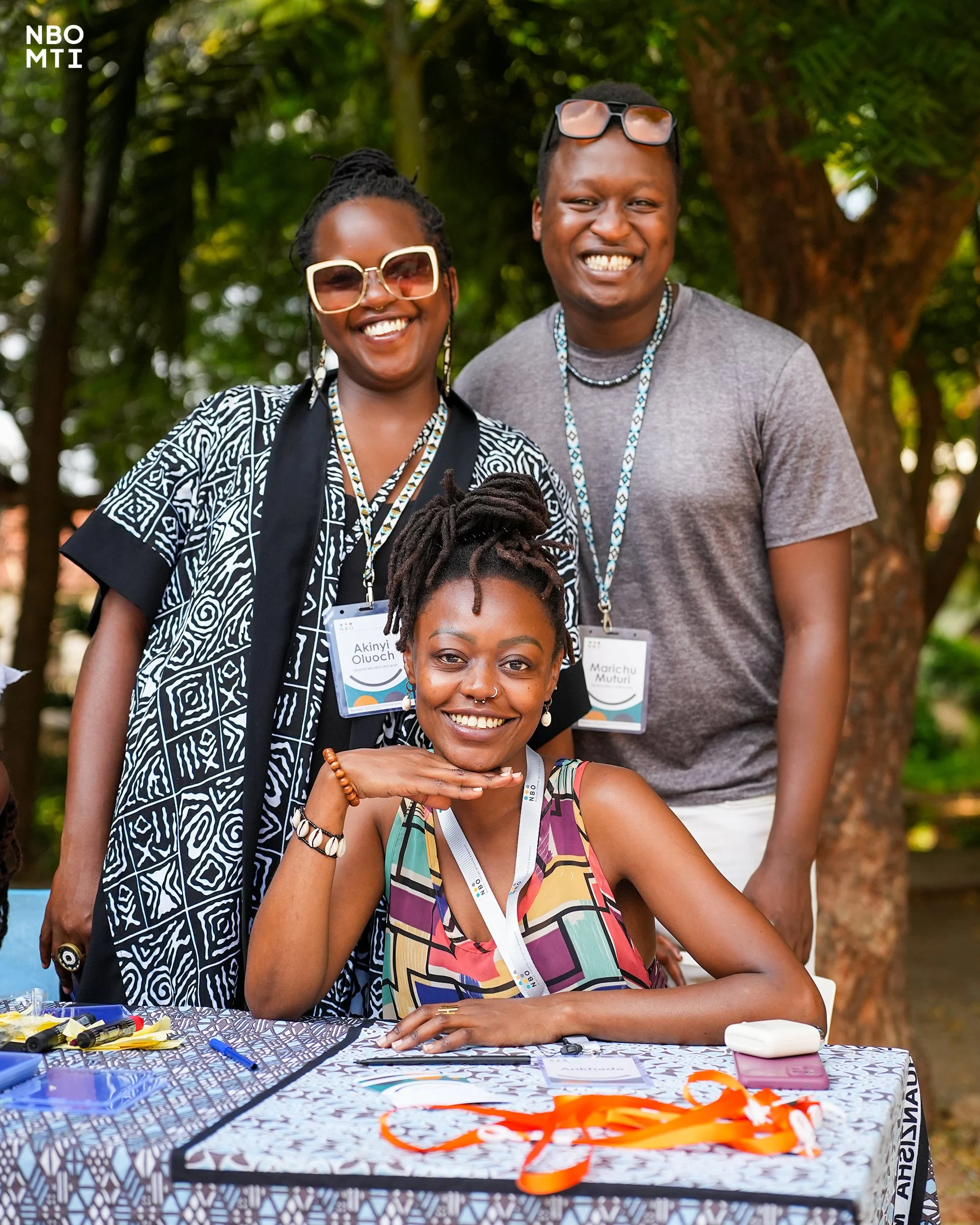
Image by Tafari
The morning warm-ups were a personal favourite all week. When the body gets a proper warm-up, the mind stays active and receptive to what follows. I watched the participants open up to playing, first thing in the morning, as if I was watching myself, or rather the version of me that attended the 1st workshop. Was I that unsure of myself? So hungry and passionate yet lost in a way, afraid to play or let loose? Afraid to express myself wholly.
We've all sat through workshops where the facilitator and their crew recite word-for-word what's on their slides, the afternoon sessions dragging on and on, woe unto you if the environment is a paid actor. You leave those rooms lucky to remember one name, let alone anything you were meant to learn.
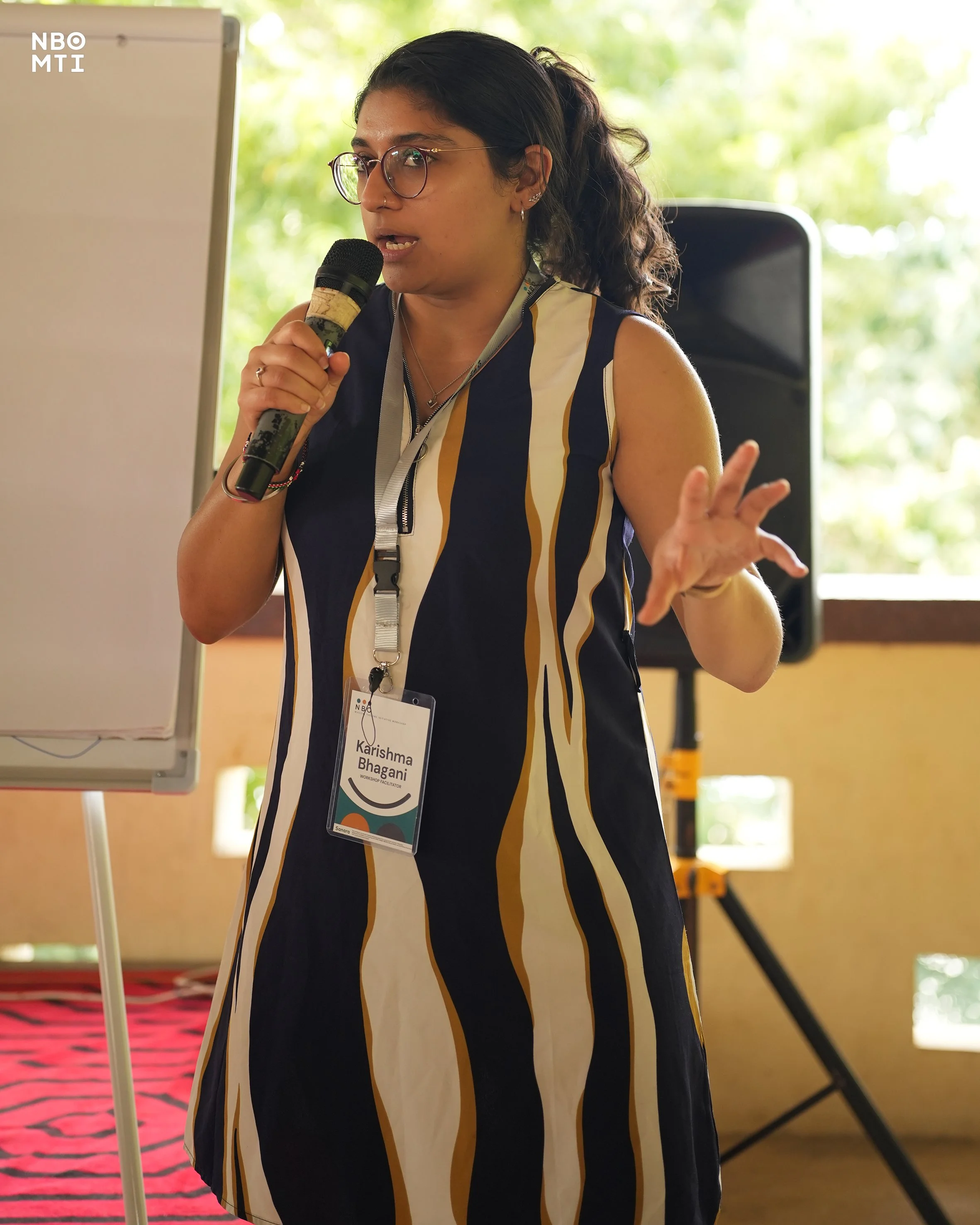
Image by Tafari
Relax, this workshop was not that. In fact, it was the complete opposite. The facilitator, Karishma Bhagani, is not only in the business of care, but she is as informed as she is creative, and she deconstructed production from this complicated, highly technical role, into something I already knew myself to be, but lacked the vocabulary for. It felt like she'd stepped into the vicinity of my mind and was matching my thoughts and feelings back to me as she spoke. As she encouraged each of us to come up with our own philosophy as a producer, I finally understood why it had taken me so long to arrive here. Not long as in wasted time. I'm familiar with timing, but long conceptually. I had circled the word "producer" for the longest time without letting myself claim it. It felt daunting, too big a shoe to fill, and worse, I believed one had to be trained in the technicalities to earn it. I was wrong. At the heart of it, to be a producer is an act of care.
Image by Tafari
It's one thing for a team to steer a production from start to finish. It's another thing entirely for that team to move through the process feeling safe, holding professionalism, and having fun throughout. Yes, it can be done. I know that sounds unbelievable given the general public relations of production in this country. But it's proven (exhibit one, me) that safety is the catalyst for real growth intertwined with actually knowing what to do in any given moment. "To have fun while creating" is a magnetic tagline for any creative. I used to think creativity had no preconditions for existing. Turns out I was wrong about that too. In my case, the creative in me is at her best when fun is an ingredient, safety is an ingredient, and intentionality is an ingredient. I'm able to have my mind where my feet stand, something I only recently understood is rare. It's what drew me to theatre in the first place. This workshop was, simply put, the iron that straightened out the wrinkles in my understanding.
Producing is an act of care, dare I say, the art of care.
I keep returning to that phrase, an act of care, because it is not incidental that producing, stripped of its budgets and call sheets, so closely resembles labour that has always been coded feminine and, not coincidentally, undervalued. Like holding a room, anticipating needs before they're spoken, making sure everyone eats before anyone performs. It is the same invisible architecture that keeps a household running, a family regulated, a community intact. A role that is quietly essential and rarely credited. For a long time, I think that's exactly why I resisted the title. I could see the shape of the labour clearly. I just hadn't been told it had a name, or that the name could be mine, or that it could sit alongside "writer" and "mediator" without diminishing any of them. Claiming producer as a feminised role isn't a demotion of it. It's a refusal to keep calling care "soft" when it is, in fact, the load-bearing wall.
I have always known I am a writer. Still, the feeling that there was more for me in theatre never left and it tugged at me constantly. Some days I wondered if I was being greedy, wanting to wear another hat on top of the one I was still learning to hone. After scriptwriting, and some contemplation, I threw myself into internships and the work that came out of them, but the sense that there was more kept growing. This production workshop was the icing on the cake. I finally saw myself clearly enough to name the kind of producer I want to be.
The room diversified my experience considerably. It was my first time learning and working alongside creatives from Mombasa. And let's not even get into the vocabulary and the accent! Who knew you could casually drop "tufaha" into a sentence and not receive a standing ovation? It's an apple, by the way. You're welcome. I volunteered to produce the talent showcase and part of the job required me to mingle and single out creatives that were performers or crafty in whichever way, aside from being a producer. As I encouraged participants to put their best foot forward, I understood something else, most of us aren't actually shy, we simply haven't been given an environment safe enough to be truly seen without judgement. It's only there that we gather what little courage we have and hold our hearts out to be witnessed by others. Most of the creatives in that room had faced real struggles, money, turbulent home and even substance abuse, but one thing our facilitator said rings true every time, you cannot pour from an empty cup. It was through encouragement and holding space for others that some artists came forward and showcased their items. One modelled for the first time and another sung in public for the first time!
My imposter syndrome around production was tied partly to the gatekeeping in the industry, and partly to my own relationship with culture and identity. When Karishma split us into groups based on the themes running through our individual mission statements as producers, our first task was to work out why we'd been grouped together. As a returning participant, I doubled as a teaching assistant, helping others settle into a workshop that was, essentially, a crash course in one of the most technical roles in theatre. It was in those group sessions that my own production style came into sharpest focus. I finally understood what I bring to the room.
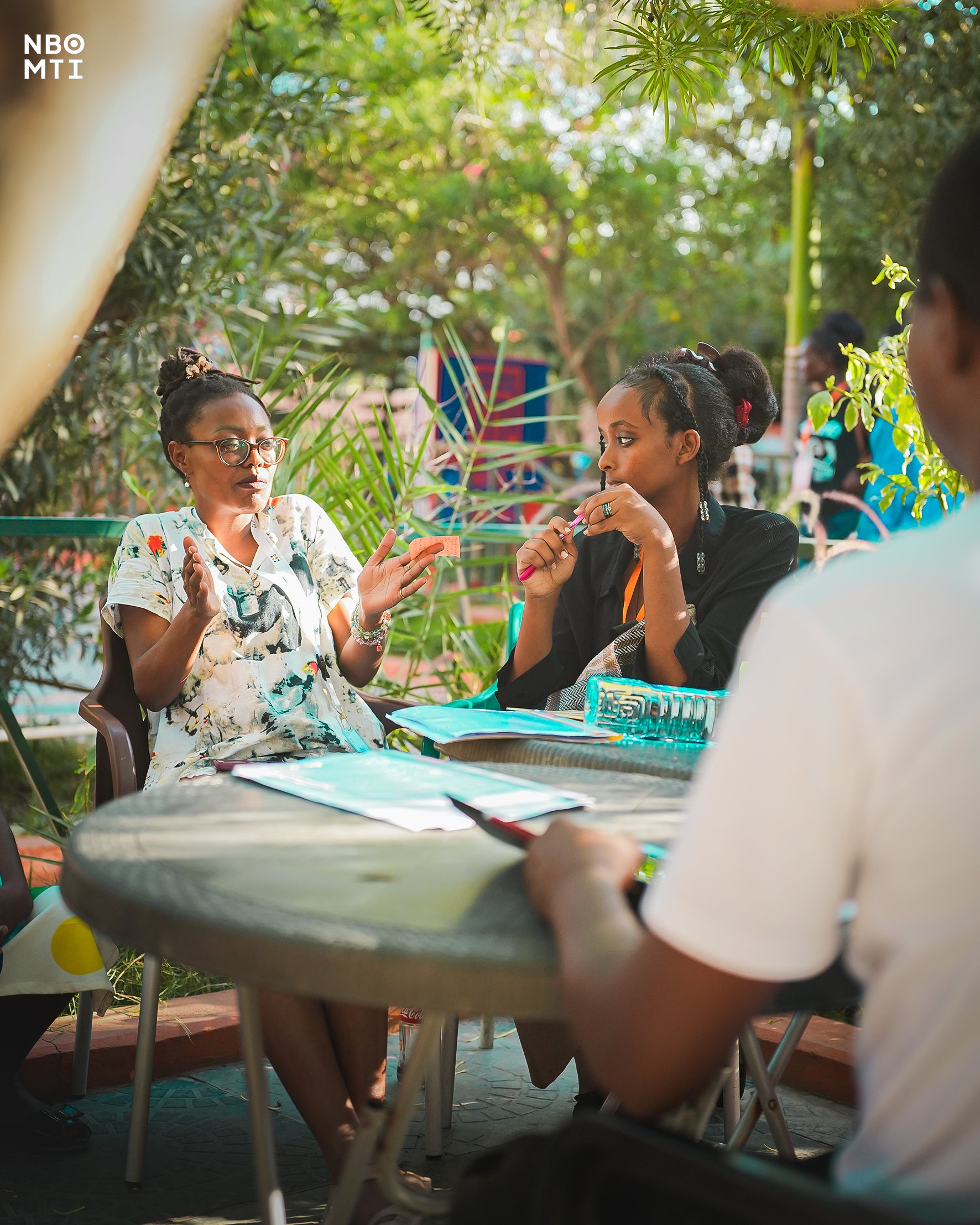
Image by Tafari
The emotional intelligence required to actually inhabit the role of producer, not just claim interest in it, or clear the technical bar, goes far beyond skill. A producer sits at the joint of every department, every mini-ecosystem within a production, and it's simply not possible to hold that position without real people skills. People-watching has always been one of my favourite hobbies, and I can now see how directly it serves me here. People tell stories through their bodies, how they dress, accessorise, style their hair, how they stand, walk and even eat. It's in how a sad person moves to music versus a sensual one, or how someone angry tilts their head when they're trying to calm themselves down. Noticing these things is as much about the particular wiring of my brain as it is about curiosity, a genuine wanting to know others, to see people fully, not just as they perform themselves for an audience.
This is where my training as a mediator folds directly into how I produce. A mediator's entire job is to read a room accurately, hold competing needs without flattening either, and find the through line that lets people move forward together. Which is, it turns out, the exact skill set a production floor demands daily. Add to that years of thinking as a playwright, tracking arcs, anticipating where a scene (or a rehearsal day, or a difficult conversation) is headed before it gets there, and you get a producing style that isn't just logistics with a caring face on it. It is dramaturgy applied to people. I'm not managing a production so much as reading its emotional plot and adjusting in real time. That combination, A mediator's neutrality, a playwright's instinct for structure, and a genuine appetite for people as they actually are is, as far as I can tell, mine alone in the room.
With that comes an unprecedented amount of emotional labour, which demands that I take care of myself with the same seriousness I bring to caring for others. The team's needs cannot be met from a place of lack. I can only give as much as I ask of others, even more if I want to be fulfilled in the role myself.
I mingled, networked, and worked through pitches with the two groups I was assigned to, one of whom hopes to actually produce theirs if all goes well. I laughed, I cried, and I made connections I believe will last a lifetime. I intend to water that garden and prune it. I can't take for granted the diversity, experience, curiosity, and talent I witnessed that week. The intersectionality of it all is impossible to miss.
On September 25th, 2025, a professional mediator walked into a scriptwriting workshop, and that was the beginning of a life she had only dreamed of, and the end of the life she had known.
Nine months later, in true human gestation fashion, because you know I love a good analogy, I have come full circle. I write more now, and my confidence in theatre, regardless of department, grows daily. My glossary is growing too (Karishma, thou art an absolute gem!).
People can only meet you as deeply as they've met themselves, and it's safe to say I am an independent writer and producer, carrying nothing into theatre but my experiences, hopes, dreams, competence, and passion. I'm not oblivious to the fact that the pace of my growth was made possible by the NBO MTI team. For anyone to carry the seed of care forward, someone had to plant it in them first. Only once it grows and bears fruit can one share their own seeds with others. Wholesomeness, it turns out, is contagious. I can't wait for the next phase. Regardless, we stay creating.
Love,
ANKHADADA, NBO MTI Alum & Lifer